Pages

Visit ADORAMA for ALL your Photographic needs - I Do!! Just Follow this link

Thursday, 21 April 2011

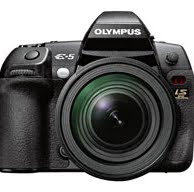
Free Image Copyright Name Integration with Olympus E-5 :-)

Olympus not only design and built excellent cameras they are on many fronts also the "innovators" like Live View that was immediately copied by the likes of Canon and Nikon.

Again it seems as if a little but profoundly important innovation has passed most (ALL?) reviewers of the E-5.

This is the ability to at the time of taking a picture your copyright details may be immediately embedded in the EXIF data of a photo.

It is possible to embed the photographer`s name and a copyrighted name into the camera which will subsequently be embedded in all the photos taken with that body.  The really nice thing here is that one has 63 characters spaces available to do this making it very easy to not have to enter cryptic names that one cannot remember yourself.  In my case I can enter my full name and surname with spaces and still have 48 characters left (including spaces) for a copyright name or description.  This is accomplished with 2 fields dedicated to "Artist Name"  and "Copyright Name"

Upon editing the image the data is automatically transferred to the "new" image.  The only time that this does not happen is with "image overlay" and with the "playback + multiple" operation.

Very useful I`d say ;-)

Tuesday, 19 April 2011

Some musings or ramblings on Digital Camera Choice and such

In the Good Old Days of Photography, well when was that?, it was much more easy to choose a camera and lenses than today. Nikon, Canon, Pentax, Minolta, Olympus and a few others. Most lenses were “prime” and propriety with a few “pirate” lens makers such as Sigma, Tamron and Vivitar.

A serious photographer would not be seen dead with anything like a pirate or zoom lens.

All that has changed..........

Though a few camera manufacturers have fallen by the wayside and Sigma and Tamron has graduated beyond producing “pirate” lenses the choice of camera models have increased to such an extent that nobody can claim that there is not a model suitable for them.

Olympus alone currently offer 29 different camera bodies which include no less than 18 “Point-n-Shoot”, 5 Mirroless interchangeable bodies and 6 “current” DSLR bodies.

Bewildering to say the least.

On their website Olympus call their Point-n-Shoot models “Digital Cameras” and have 4 categories covering 18 different models. These sporting 3.6 X to 30 X Zoom, freeze proof, shock proof, crush proof, HD Video, up to 10 frames-per-second shooting, GPS, Dual Image stabilisation and Eye-fi compatible.
Image compiled from various sources.
The PEN bodies offer 5 variants with 7 Micro Four Thirds lenses and adapters for Four thirds lenses from the DSLR range to be used on the mirrorless bodies.
Image compiled from various sources.
Then, just to make matters worse, the DSLR E-Series offer 6 “current” bodies including the newest flagship model, the E-5. To suit about every pocket, added to this are 8 “Standard”, 7 “Pro” and 6 “Top Pro” lenses with increasing prices to match. The flagship E-5 DSLR Body with the flagship ZUIKO Digital ED f 2.8 300mm lens will require an investment of $8699.98
Image compiled from various sources.
As if all this is not bewildering enough, even for the average amateur, the post-processing possibilities that can be done on the pictures just taken, just boggle the mind. It seems as if digital photography has made photography more difficult rather than easier :-/

But...

There is help and support at hand.

The internet not only offer porn but luckily also so many photography tips and forums and user groups that photography becomes a field so vast that the preference and needs of any photographer from absolute novice to pro will find the answer to a “difficult” question without having to even leave their home :-)

Thursday, 14 April 2011

Olympus E-5 DSLR Reviewed by DPREVIEW.COM

As I`m of the personal opinion that DPREVIEW Staff are biased towards Canon, Nikon and Adobe Photoshop the following verdict pronounced over the Olympus E-5 really surprised me.

Screen printed from DPREVIEW.COM and then cropped.

I would just like to know how many people actually use these so-called high ISO Settings.  In the "good old days" of photography very few photographers ventured above 400ASA unless they wanted a specific result such as "graininess".

or ...........

Maybe I`m wrong :-/

Might the following statement be true?  "People use high ISO settings just for the sake of using these because it is available and then complain about the result because we are a culture of "moaners"?

It seems to me that poor performance at higher ISO settings has replaced the megapixel debate as the choice of argument.  Just like with most software available only a fraction of the capabilities of a camera system is utilised and few photographers have the inclination or time to try and use most features on a routine basis.


My selfish tirade aside the verdict is still good and in the ball park with most other DSLR cameras out there.

My own verdict to follow soon.  BTW I AM biased TOWARDS OLYMPUS.

NEWS ! NEWS !! NEWS !!!

14th April 2011

I`m happy to inform you that I have received a free license from imatest to use their lens testing software for use on Olympus and Olympus Compatible Lenses.  These lenses will still only be used on OLYMPUS DSLR and OLYMPUS Mirrorless Bodies.


A GREAT THANK YOU to imatest


Saturday, 05 March 2011

A worthy little book

Although I`ve been involved with cameras and photography since 1974 I still like to buy "basic" photography technique books.  Why?  Well as far as I`m concerned the basics never change regardless of whether it be traditional film or digital.  It is very relaxing to just page and brush up on these things when I have little time to confirm a technique or two.

Michael Freeman is one of those lucky buggers that take photo`s for Smithsonian Institute, Nat Geo etc and really has a wealth of experience and knowledge.  Hence the worthy little book that I`m writing about.  Yes he has written many books covering one aspect of photography only but it is impossible to take the whole library into the field.

As camera bags are made to carry cameras and equipment there is very little space for any unnecessary junk so Michael and Ilex Press came out with the PERFECT little companion for ME!!!
This worthy little book measure only 156mm x 120mm and is only 13mm thick.  Did I say only 13mm thick?  Well, well it is 13mm of pure GOLD and actually has 192 pages including the index.

Michael manages to cover no less than 73 topics under 6 headings.  A major feat in my opinion.

The headings are;

Preparation (6), On the Road (12), Appreciating Light (20), Subjects (11), Themes (17), Reference (7)

Just quickly looking for something to repeat here as an example brought the following;

"Although leaving something behind at home as fundamental as a battery charger may well seem disastrous on the day of arrival at your destination, in practice few things are irreplaceable.  Enter the world of workaround........"

Little gems like these are found on EVERY page of the book and I highly recommend any photographer to buy AND carry this book everywhere.  For me this is a MUST HAVE little book!!

ENJOY!!!!!!!


Useful buying and ordering information about the book.

Printed by ILEX Press

ISBN-10: 1905814739
ISBN-13: 978-1905814732

Saturday, 26 February 2011

New Olympus mju 8010 Tough - An Opinion

The newish mju 8010 Tough is the replacement of my previous mju 8000 that was stolen while I was unconscious after a motorcycle accident.

The mju 8010 share the really solid feel of it`s predecessor.

Unfortunately it is hampered by a fatal flaw.  Focusing.  In landscape mode it has a problem when zooming in to compose.  In about 99% of cases it will not focus at all when zoom has been applied.  Even when seeking a "high contrast" place in the view it will not focus.  When then zooming out it will not focus again and has to be restarted.

The following photo`s will try to illustrate this.

The following photo disregard all rules of composition but was deliberately take as such to illustrate the "Focus Flaw" of the Olympus mju 8010 Tough.  It had to be taken this way as the next photo will illustrate in order to  be "cropped" to a correct composition.


Here is the photo that was "planned".  Not really excellent in composition but it was the result of being completely frustrated by the "Focus Flaw" just ending up in taking the photo to contribute to this blog.


The result of the "cropping-for-composition" because of the "Focus Flaw"


The ideal composition that should have been able with zooming.


But as this is not usually a problem with the purpose of this camera I`ll continue using it as it gives fairly acceptable photo`s even at nigh and a super macro setting as the following photo`s illustrate.


This photo was taken in "Portrait" mode as the problem of the "Focus Flaw" would not allow this type of composition. The surreal colour is because of the surrounding water and the added effect of the overcast sky.


Same as the above for this photo.


Frog taken at night in Super Macro with Light Assist  mode.  Actually is better than most illustrations used for identification in scientific books.

Wednesday, 03 February 2010

National Geographic Books

Sad to say that though National Geographic claim that this is their most popular Photography Guide it is probably because of the misleading cover page.

On seeing the cover I thought "This is THE BOOK to have".

To say that I was disappointed is an understatement.  To me it felt that I was mislead and thus "stolen" from.  To make sure that I was not biased I asked another photographer to read the book and give me his impression.  Unfortunately this person said the following:  "The cover is misleading and this book is of a lower content quality than most other photography books. Nothing new in this book."

So now one has to ask yourself whether all the National Geographic Photographic Field Guides are the same?  I will never know unless I get a chance to page and read a copy of another photographer.


National Geography does have one other book that I bought that I`m not THAT disappointed with and that is the "National Geographic Photographing BIRDS" and only because there are a few good photos included.  There are the GENERAL tips about luring birds and which lenses to use for different situations but nothing that cannot be found elsewhere or is mainly common sense.  There are 2 pages on building a simple hide which is so simple that even a child could have thought that out.

QUESTION:  "Would I recommend these to books to even a beginner amateur photographer?

ANSWER:  Short and sweet.  NO !!!!

Next time:  A worthy photographic guide.